
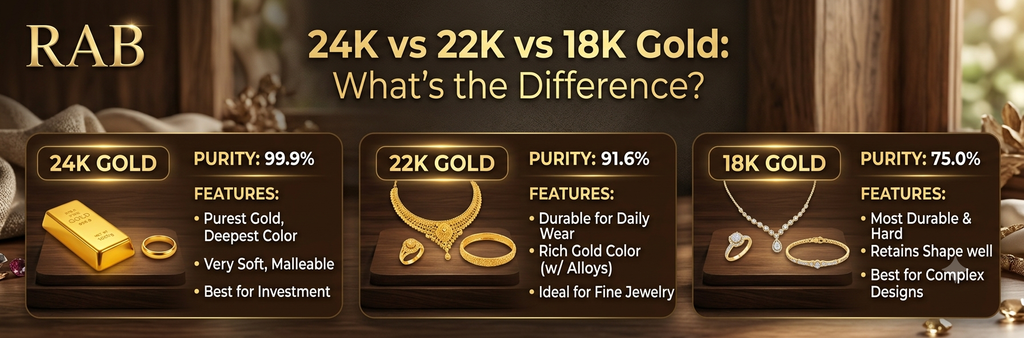
Gold has always been one of the most popular choices for jewellery, but buying gold can sometimes feel confusing. You may have seen terms like 24K, 22K, and 18K gold while shopping for jewellery and wondered what they actually mean.
The main difference is gold purity. The “K” stands for karat, which tells you how much pure gold is present in the jewellery. Understanding the difference between 24K, 22K, and 18K gold can help you choose the right jewellery based on your budget, durability, and purpose.
What Does Karat Mean in Gold?
Pure gold is considered 24 karat (24K). Since 24K gold contains almost 100% pure gold, it is the highest-purity form commonly discussed in jewellery.
When other metals such as silver, copper, zinc, or palladium are mixed with gold, the purity decreases. These additional metals make gold harder and more suitable for everyday jewellery.
For example:
- 24K gold = approximately 99.9% pure gold
- 22K gold = approximately 91.6% pure gold
- 18K gold = approximately 75% pure gold
The remaining percentage consists of other metals.
24K Gold: Highest Purity
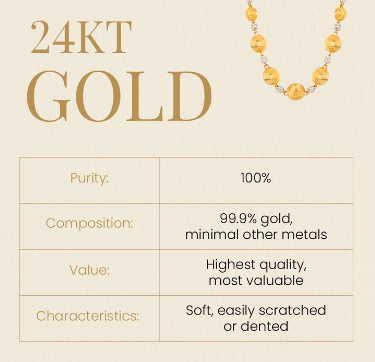
24K gold is the purest form of gold among these three options. It has a rich, bright yellow colour and contains very little alloy.
However, pure gold is relatively soft. This means 24K gold can scratch, bend, or lose its shape more easily than lower-karat gold.
Because of this, 24K gold is generally more suitable for gold bars, coins, and investment purposes than jewellery that is worn every day.
22K Gold: Traditional and Durable
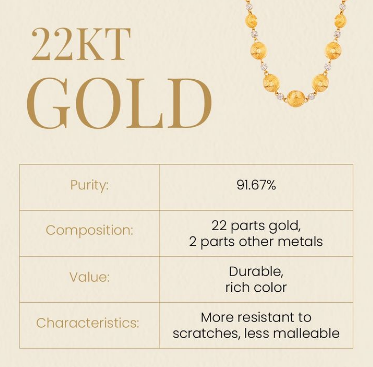
22K gold contains approximately 91.6% pure gold, with the remaining portion made up of other metals.
It is harder than 24K gold while still maintaining a rich golden appearance. This makes it particularly popular for traditional and bridal jewellery, especially in India.
22K gold can be a good choice if you want jewellery with high gold purity while still having enough strength for regular use.
18K Gold: Stronger for Everyday Jewellery
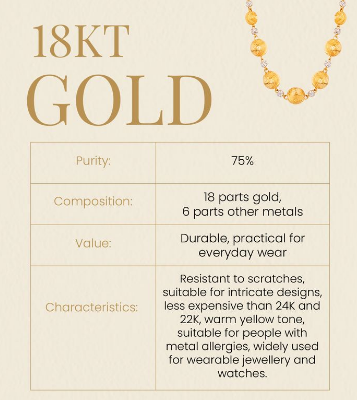
18K gold contains approximately 75% pure gold and 25% other metals.
The additional metals make 18K gold more durable and resistant to everyday wear compared with 22K and 24K gold.
It is commonly used for rings, bracelets, earrings, diamond jewellery, and contemporary designs. Depending on the alloy used, 18K gold can also be available in yellow, white, or rose gold.
24K vs 22K vs 18K Gold: Which Should You Choose?
The right choice depends on what you want from your jewellery.
If maximum purity is your priority, 24K gold is the obvious choice. If you want a balance between purity and durability, 22K gold is a popular option. For jewellery designed for frequent or everyday wear, 18K gold offers greater durability and versatility.
Final Thoughts
Choosing between 24K, 22K, and 18K gold is not simply about choosing the “best” gold. Each type serves a different purpose.
24K gold is best when purity is the priority. 22K gold offers a balance of high purity and durability and is especially popular for traditional jewellery. 18K gold contains less pure gold but offers greater strength and is well suited to modern, everyday jewellery.
Before buying, always check the purity, hallmark, weight, making charges, and overall quality of the piece. Understanding gold purity makes it easier to make a confident and informed jewellery purchase.